The second installment in the Sookie Stackhouse series was an improvement over the first novel. I’m not entirely sure where this novel fits in with the television show, but my remembrance is that the two primary plot lines encompassed more than one season on the show. The two main storylines are the one involving Sookie going to Dallas to help find a vampire that has gone missing, and Lafayette (who was a much bigger character on the television show) showing up dead in the sheriff’s car.
This novel was an easy read. Charlaine Harris writes in a pleasing style. The plot is not terribly complicated, although there was still room for a plot twist or two. Eric starts to become more of a major character in this novel, which is a good thing since he was my favorite character on the show. He has a certain confidence and swagger about him. Harris did a fine job breathing life into the character. Although not overly complex, the plot had enough meat on it to make it compelling. In a day and age where novels seemed to be growing in word count, this novel was short, sweet, and to the point. This was a fun novel that I would recommend.
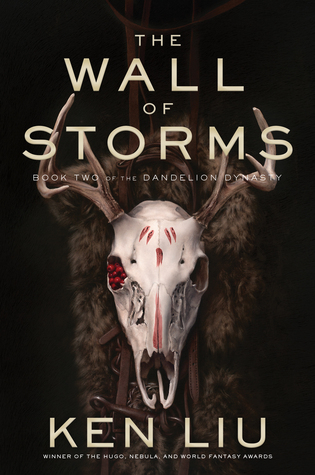
The Wall of Storms is the follow up to The Grace of Kings. I started reading this immediately after I finished reading the last novel. I absolutely loved the first book in the series, so the bar was high for this novel. Perhaps, the bar was set to high, because I was a little disappointed in this novel. It’s not that it was bad, but it clearly does not measure up to the first novel in the series.
The novel takes place about ten years after The Grace of Kings. Kuni Garu is now the emperor trying to keep his kingdom together with duct tape and cult of personality. He faces treachery from within his own house, disgruntled nobles in the various kingdoms, and followers of the deceased hegemon. This is all the prelude to an upcoming invasion by a group of people who seem kind of like Vikings, but instead of longships, they have flying beasts that breathe fire and are capable of all sorts of destruction.
There is a lot of intrigue in this novel. There are also all sorts of technological innovations, which set this series apart from any epic fantasy series I have ever read, where magic is replaced by primitive (by our standards) technological innovation. There are, however, two big problems in this novel. One is that it is overwritten. It doesn’t have to be nearly as long as it is. I think if about 200 pages or so were chopped off, it would have been a better read. There are entire passages and flashbacks that contribute little to the story. The second point is that the characters in the first novel were terrific. They were phased out or killed off in this novel, for the most part, and the next generation of characters replacing them, which were more in focus here, were not nearly as compelling. In any story, but especially a series, the characters are the lifeblood of the story.
The ending of the novel sets up for a third in the series, and I will be interested in reading it, but my enthusiasm for it has waned a bit.
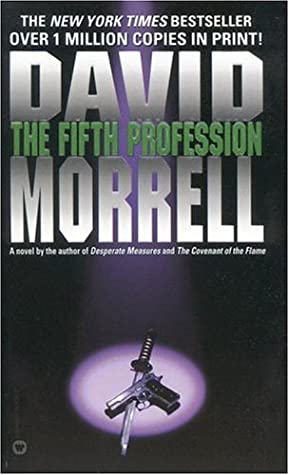
The Fifth Profession is an interesting novel. It’s part espionage thriller and part sci-fi. The crux of the story is that Savage, a former Navy SEAL and executive protector on an assignment to rescue the wife of a wealthy businessman, encounters his Japanese counterpart, Akira, who he saw die when they were serving on an assignment together. Akira has the same memories, except he saw Savage die. They get together and piece together their jumbled memories and find out that many of the things they remembered didn’t actually happen. This leads them back to Akira’s homeland of Japan, where the mystery ensues.
I found this novel to be intriguing. The mystery component was captivating, and I wanted to see how it unfolded. There was action galore with plenty of fight scenes and some chases. It works at that level even without the added element of the jumbled memories. That part of the novel was problematic however, since the false memories storyline really strained believability. To further exacerbate the issue, the author never really explains in any detailed or believable way how the two main characters got their false memories. It was all kind of wave your hand behind the curtains hocus pocus type stuff. Although there was lots of good action, I thought the fight scenes could have been executed a little better. Getting past that, I thought the novel delivered. I was entertained from beginning to end.
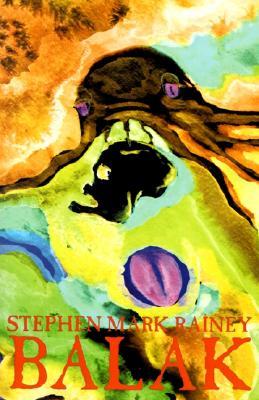
Balak is a Cthulhian mythos style novel set in modern-day Chicago. The novel starts off with the disappearance of a little boy, in part witnessed by Claire Challis, whose own child disappeared not long before that. This leads Claire and her boyfriend, Mike, into a dark church, whose members worship Balak, an ancient figure who serves an even more ancient god, who was around when the world was new in a typically HP Lovecraft motif. The Chicago police become involved. All of this leads to an end of the world scenario, where Balak is trying to use Claire to allow this ancient god to enter our world.
I’ve read a number of Lovecraftian type stories, and this kind of falls in the middle of the pack. There was nothing particularly bad about, but it also doesn’t rise above some of the others I’ve read. For me, the bar is set with Brett J. Talley’s work, whose take on Lovecraft is top-notch. The situation is fairly ordinary. The characters are solid, but none of them fell into the category of someone I was rooting for to succeed. I just couldn’t latch on to them. The novel is very competently written and was a decent read. You could do a lot worse than this novel, but it’s not one that I feel as if I’ll remember a year later.
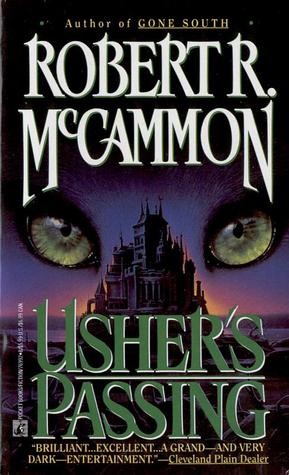
When I first started reading this book, I thought it would be a historical fiction novel featuring Edgar Allen Poe and the Usher family that he wrote about over a century ago. It turned out to be set in modern-day. I was hoping for historical fiction given that McCammon is terrific as an author in that genre. Having said that, Usher’s Passing did not disappoint.
It was an interesting and imaginative tale. In this world, the Usher family is one of the wealthiest in the world, with their fortune tied to the sale of arms. Rix Usher is the outcast of the family. He’s a horror writer (I imagine Robert McCammon put some elements of himself into this character). He’s vehemently against the family business but returns to their compound in North Carolina with his father dying. Although Rix doesn’t want anything to do with the family business, he wants to write an expose/history of the family in sordid detail. But what lurks beneath the surface is the supernatural and how the family has been able to achieve the fortune through ties with otherworldly forces.
There are some nice twists and turns in this novel. The main baddie here is the Pumpkin Man, a supernatural character who has been abducting children for decades. When the reveal was finally made about the Pumpkin Man’s identity, I was surprised. It was a well-delivered set up that made sense in retrospect but caught me off guard. I thought there was good character development in this novel, with a good many memorable characters. The writing was strong and purposeful. The supernatural elements mixed in well with the parts that were grounded in reality. My only negative was that I felt it dragged in certain parts and could have used some trimming to make it a tighter story.