Ozark ranks for me as one of the best shows in the past five years, and might even crack my top 10 list of all time. It reminds me of Breaking Bad in many ways. In both shows there is someone who is a novice who enters the world of the drug trade and fumbles and stumbles their way through it. Eventually the novice becomes very good at plying the drug trade and rises to power, but there is a nonstop barrage of obstacles in the way.
That was the case in season 4 as well. There were several times where Wendy and Marty Byrde got into situations where I had to ask myself, “How the hell are they going to get out of this?” But, as usual, they prove to be super resourceful, although Wendy acted irrationally in the final season and more or less lost it. Ruth Langmore also acted in utterly insane and reckless ways.
The cast and the writing in the show were definite strengths. In particular, Marty and Ruth Langmore were my two favorites. What I enjoyed about Marty is that he was always so even keel and logical, even in the face of some incredibly difficult and stressful situations. Ruth, on the other hand, was neither of these things, but she oozed attitude and moxy. Of course, these things got her into all sorts of trouble. The one character that really irked me was Jonah Byrde. His story line, where he was a money laundering mastermind at age 15, was just a bridge too far for me to cross.
Ozark ended the same way it had been for four seasons. Even when everything was seemingly going great, you just knew it wasn’t going to last, and things would ultimately burst at the seams. Both the season and the ending were really well done and fitting thematically. The show had run its course, and I am glad they decided to end it at this point.
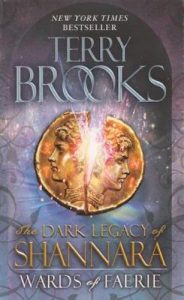
Wards of Faerie is the first book in the Dark Legacy of Shannara series. There’s no question that Terry Brooks has a formula that he follows in all of these series. Some great talisman must be found (in this case missing Elfstones). A group of characters must be gathered and this group always involves druids, elves, at least one member of the Ohmsford family, a member of the Leah family, and an assortment of others. They have to travel a long distance to achieve this goal and there are both human (the Federation) and non-human groups opposing them.
Although this is formulaic to be sure, it is also comforting. I know that when I read Terry Brooks, I’m going to get a well written epic fantasy novel. There’s going to be danger, good characters, a journey, and many of the elements that I like in my fantasy. This novel is no different. The first novel sets the stage, but to really judge it, you have to read the entire trilogy, and then see how it compares to the other trilogies.
What I like so far is the use of airships for travel. It’s not the first time they are being used, but I think they are a cool addition. I also like that the series is coming full circle now that science is coming back again to the world. After the world went into an apocalypse where science (in the form of nuclear annihilation) led to the end of the world and the rise of magic, science is now making a come back and threatening the supremacy of magic. The tone is overall a little darker than in some of the other books in this series.
Thus far, it’s a solid first book. It’s not spectacular but good. As I mentioned before, it’s difficult to judge this by itself but only in the context of how good the overall series will be, which is still too early to tell.
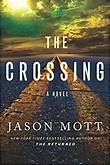
The Crossing is an apocalyptic novel which has humanity in a slow decline precipitated by a disease spreading among the population that starts killing off the elderly but is slowly progressing through the younger population, and a world war that is killing off the younger people. Dodging the draft, twins Tommy and Virginia Matthews, after having gone through foster home to foster home throughout their young lives, go on a trip to Cape Canaveral to witness a rocket launch to Europa, one of the moons of Jupiter.
This novel had some good and some not so good in it. What I especially liked was the writing style. Jason Mott is a talented author who has a way with words. I also thought the characterization was particularly strong not just for the two main characters, but also their foster father, who is ostensibly the antagonist in this story, but really isn’t a villain. He is presented as someone who is, although not perfect, guided by conviction of right and wrong and is doing what he sees as his duty.
What I didn’t like about the novel were many of the side stories with nameless, faceless characters that didn’t add anything to the story except to the word count. Really, this is a novella, not a novel, which had a lot of fluff added to it to fill pages. The other thing that bothered me was that this is a first person novel told by Virginia, who has a didactic memory. The author violated the logic of this storytelling method by having her narrate parts of the story that she isn’t in, providing what everybody said and thought in those scenes. It’s an illogical way of telling a story. There is a throw away line at the end to explain it all, but that rang hollow to me and didn’t come off as credible. The ending was also more of a whimper than a climax. Overall, I did enjoy this story but it could have been better.
Dr. Strange in the Multiverse of Madness is yet another addition in the slow decline of the Marvel franchise. It’s been a while since the lords and masters at the Walt Disney company have produced anything worthwhile with Marvel (Spiderman No Way Home doesn’t count since it was produced by Sony). This movie was just lackluster in so many ways.
For starters, it was confusing and hard to follow. I felt as if they were just throwing out as many weird things as they could without any rhyme or reason or explanation. Half the time, I didn’t know what the heck was going on, and I felt the writers and director didn’t feel it was worth their while to provide a proper explanation.
Another thing that annoys me about recent Marvel ventures is that they use a popular character (Dr. Strange) and put them next to an unknown character (American Chavez) in order to get them over with the fans. It doesn’t work. American Chavez was a poor character who I couldn’t possibly care less about. This movie could have used more Wong and less American Chavez.
Finally, when I first realized that Scarlett Witch was the villain in this movie, I knew exactly how it was going to end. Spoiler alert: it was the same exact way that Wandavision ended. It was both completely predictable and utterly unsatisfying. I just feel that the Marvel universe under the reigns of the evil overlords at Disney is saturated and has run its course. They no longer seem capable of making good movies and shows. I should just pull the plug on watching these movies, but I am sure I will keep coming back for more.
I was never able to get into The Unfinished Land, and as a result the novel fell flat for me. There were a few reasons for this. One is that the writing was archaic. I understand that the novel is set in a period during the height of the Spanish Armada, but that’s not a reason to make this story hard to read. The author could have more elegantly worked with the time period to make it feel authentic yet increase the readability of the novel. Second, the novel is slow to develop. The author presents the story in drips and drabs, which results in a very slow pace and an overall dull read. Finally, the main protagonist, Reynard, is a passive character. The action happens around him. He is almost there observing. He does very little in the story, and as a result, is not a particularly interesting character.
This novel was hard to get through. It just wasn’t particularly compelling even though the description of the story sounded like it would be a good read. The concept of the story is a decent one. It was the writing and execution of this concept that was subpar. As a result, I would suggest passing on this novel.